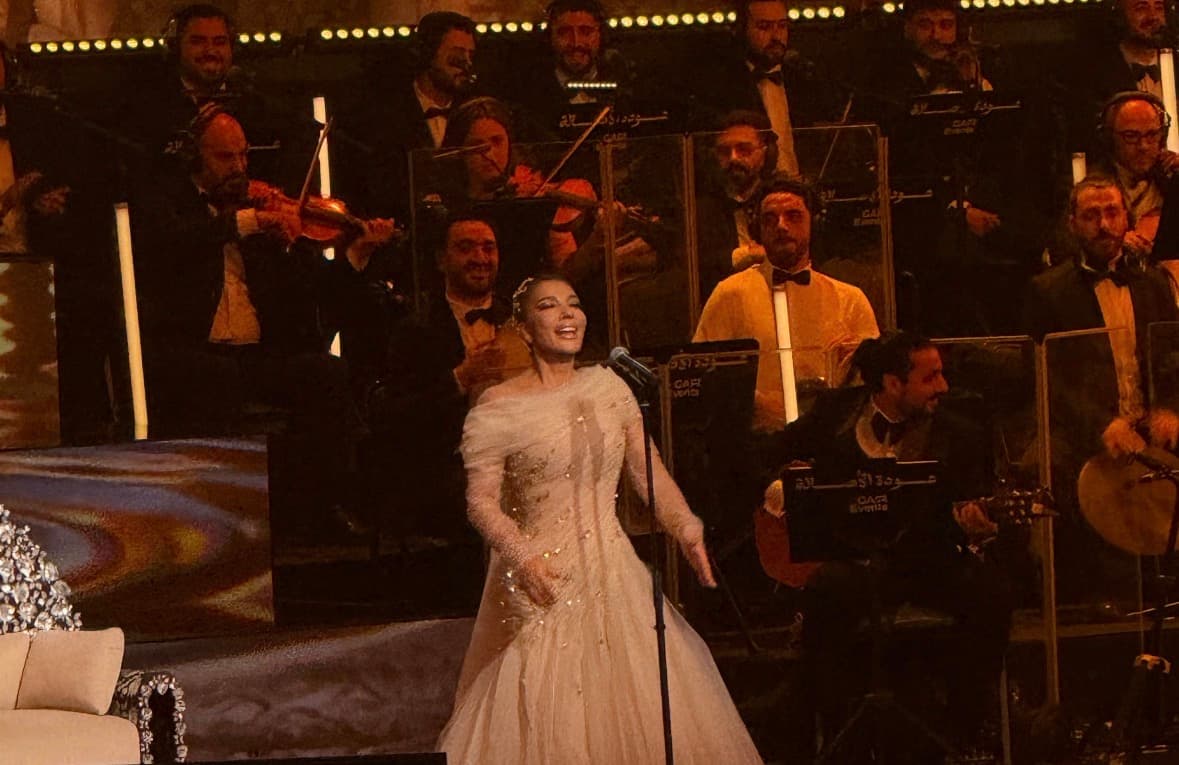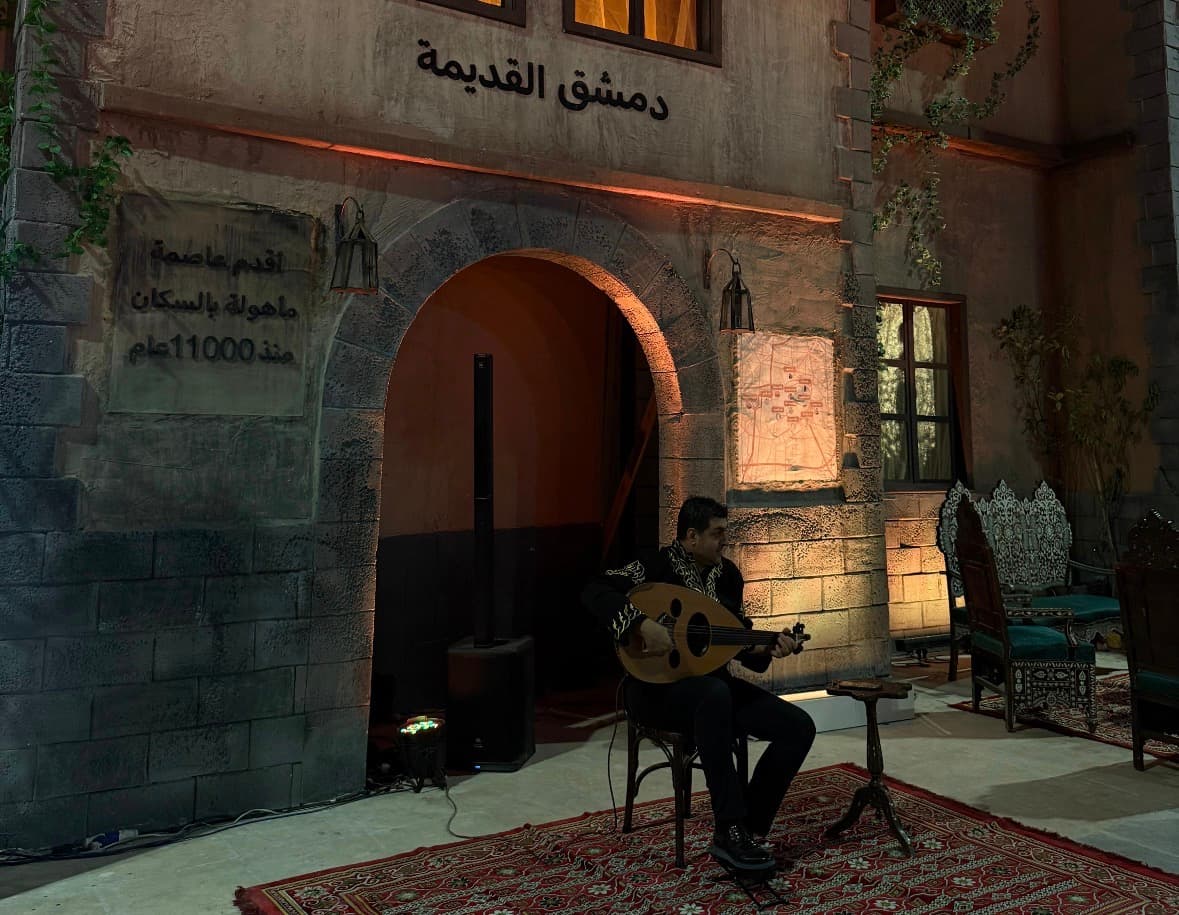
A pavilion at a trade fair is not usually an event of great historical consequence.
But at this year’s Damascus International Fair, one of them is unusual enough to deserve a closer look.
Amid the trade stands and government displays, visitors can find traditional Kurdish clothing, woven fabrics, copperwork and musical instruments.
None of these things is particularly unusual in Kurdish communities in Syria. What is unusual is the setting.
For the first time, according to its organisers, Kurds are participating at the Damascus International Fair under their own cultural identity.
It is tempting to make too much of that. A pavilion cannot tell us what place Kurdish identity will ultimately have in the new Syrian state.
Kurds have lived in what is now Syria since long before the modern Syrian state existed. Their communities are concentrated particularly in the northeast and along parts of the northern border, while Kurdish writers, musicians, merchants and political figures have also formed part of the life of Damascus and Aleppo.
Their relationship with the Syrian state has rarely been straightforward.
Under decades of Baathist rule, the government promoted a strongly Arab conception of national identity. Kurdish language, publishing and cultural activity faced restrictions, and expressions of Kurdish identity could acquire political significance simply because they were Kurdish. Kurdish literature, for example, was suppressed under Assad, with books sometimes circulated discreetly rather than openly.
The consequences went beyond culture. An exceptional census conducted in Hasakah in 1962 deprived large numbers of Kurds of Syrian nationality, creating a problem of statelessness that endured across generations.
The new government has moved to reverse that legal legacy. In January, President Ahmed al-Sharaa issued a decree annulling the exceptional measures resulting from the 1962 census and granting Syrian citizenship to residents of Kurdish origin, including those who had previously gone unregistered.
The decree went further, recognising Kurdish as a national language, permitting its teaching in schools in areas with significant Kurdish populations and making Nowruz an official national holiday.
Against that history, a display of embroidered clothing and musical instruments at a fair in Damascus looks a little less commonplace.
The Damascus International Fair has its own place in Syrian memory. First held in 1954, it developed into one of the country’s great public spectacles: part commercial exhibition, part national showcase and part family outing. Foreign countries displayed machinery and consumer goods, Syrian companies advertised what they made, and generations of visitors came for the lights, crowds and entertainment.
Mohammed Suleiman, director of the Kurdish pavilion, has said the aim is to introduce visitors to Kurdish culture and heritage while presenting it as part of Syria’s wider national fabric.
The Welat folklore troupe has performed Kurdish dabke at the fair. For visitors unfamiliar with Kurdish traditions, the encounter requires little explanation: music, traditional dress and a line of dancers bringing the pavilion to life.
Earlier this year, the Damascus International Book Fair featured its first dedicated space for Kurdish cultural publications. Books on Kurdish history, literature and folklore were displayed openly, part of a much wider loosening of the restrictions that had shaped publishing under Assad.
Among the material displayed were older Kurdish publications and documents connecting Kurdish cultural life to Damascus itself.
That detail is worth lingering over.
Kurdish publications produced in Damascus nearly a century ago complicate the convenient idea that recognising Kurdish culture means introducing something foreign into Syrian life. Kurdish culture was already there. What changed over subsequent decades was the political space in which it could be expressed publicly.
Syria’s larger Kurdish questions have not disappeared. The Syrian Democratic Forces, the Kurdish-led force that controlled much of the northeast outside Damascus’s authority for years, have now been dissolved as an independent military force. Their fighters have been integrated into state forces, while the institutions of the Kurdish-led autonomous administration have been brought into the Syrian state.
That has transformed the political landscape without settling questions over political representation, local administration, language and education, or how Kurdish identity will be accommodated within the Syrian state. How the new rights and protections take shape in practice remains to be seen.
A dance troupe cannot negotiate those matters, and a display of copperwork cannot resolve them.
Nor should either be required to.
Countries often talk about diversity in the abstract. Culture makes it more tangible: the language of a book, the words of a song, the embroidery on a dress or the steps of a dance.
Together, they tell us something about what has always been there.
At the Damascus International Fair this year, some of it is simply easier to see.
Ways to read this article:
Sign up to keep reading
Sign up to our newsletter to get full access to all our articles.