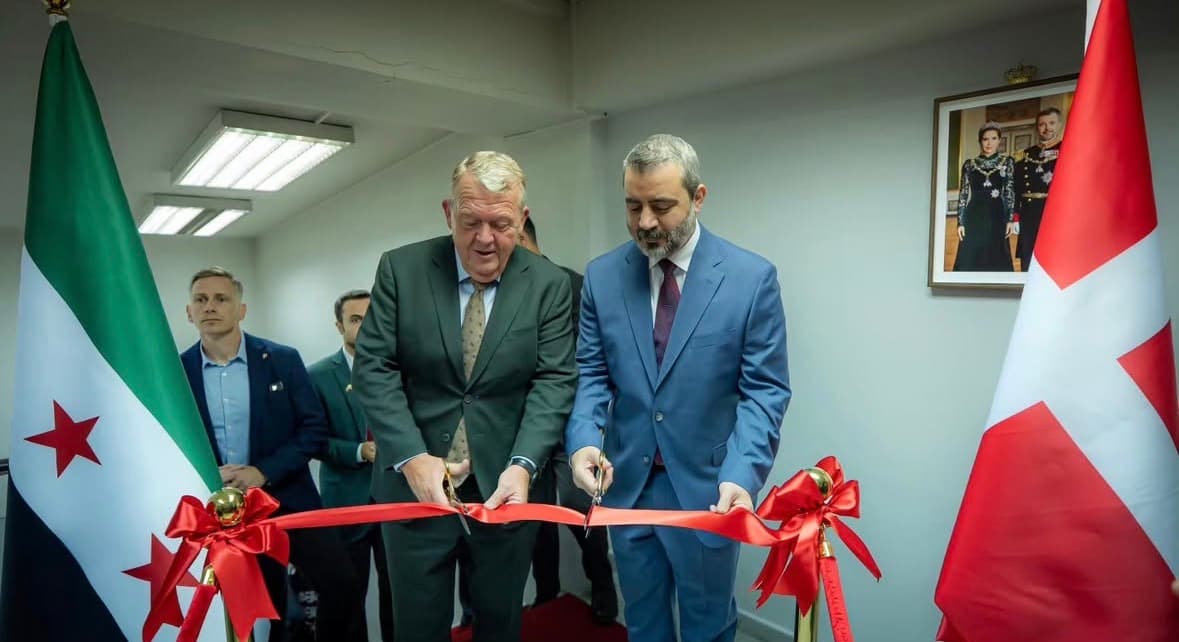
Denmark has reopened its embassy in Damascus, restoring a resident ambassador to Syria for the first time since 2012 and becoming one of the first EU countries to do so following the fall of Bashar al-Assad.
Foreign Minister Lars Løkke Rasmussen formally reopened the embassy on Monday, nearly 14 years after Denmark closed the mission to the public during the war in Syria.
Beyond restoring diplomatic representation, Copenhagen is linking its renewed presence in Damascus to three priorities: Syria’s reconstruction, closer relations with the new government and cooperation over the return of Syrians from Denmark.
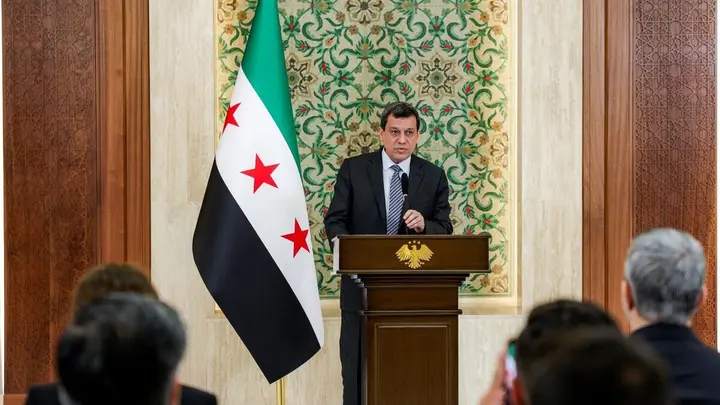
“We are among the first EU countries to reopen our embassy in Syria after the fall of the Assad regime with a posted ambassador,” Rasmussen said. He said a presence in Damascus would give Denmark greater ability to influence developments, contribute to reconstruction and strengthen relations with the transitional government.
It will also provide a direct channel for one of the more politically sensitive issues shaping Europe’s relationship with post-Assad Syria: migration.
Denmark wants greater cooperation on voluntary returns as well as the removal of Syrians who have no legal right to remain in the country. The decision to reopen the embassy was announced in January as part of a wider Danish reform of deportation policy.
That places the embassy at the intersection of two changes taking place at once. Syria is seeking international support and investment for reconstruction, while European governments that received large numbers of Syrians during the war are reconsidering their relationships with Damascus and their policies towards Syrian refugees.
Denmark’s return may therefore offer an early indication of how Europe’s relationship with post-Assad Syria is changing: away from a policy built largely around isolation, sanctions and managing the consequences of war, and towards a more transactional form of engagement in which diplomacy, reconstruction and migration increasingly intersect.
Denmark is backing that engagement with money. Copenhagen expects to commit around DKK 489 million to Syria in 2026 through humanitarian, stabilisation, migration and regional programmes. It is also considering a new multi-year development programme from 2027 to support reconstruction.
Of that support, DKK 101 million is being provided this year through the UN’s humanitarian fund for Syria, the International Committee of the Red Cross and the UN Population Fund. The money will support food assistance, water and sanitation programmes and essential health services, among other areas.
Rasmussen linked that support to Denmark’s migration policy. Reconstruction, he said, should help create conditions for refugees and internally displaced Syrians to return.
Reconstruction assistance can therefore serve humanitarian and development objectives while also helping European governments pursue a domestic priority: creating conditions under which more Syrians can return.
But those objectives do not necessarily move together. The fall of Assad removed the principal political obstacle to European engagement with Damascus, while leaving governments to make difficult judgements about Syria’s transition, the conditions for refugee returns and the terms on which reconstruction assistance should be provided.
A resident embassy gives Denmark a closer view of developments inside Syria and direct access to Syrian officials at a time when Europe’s broader relationship with Damascus is still taking shape.
Denmark’s decision does not mean other European governments will follow the same course. But it illustrates how the terms of engagement have changed. The question is no longer simply whether to deal with Damascus, but what European governments hope to achieve by doing so.
After 14 years, Denmark is back in Damascus.
Ways to read this article:
Sign up to keep reading
Sign up to our newsletter to get full access to all our articles.