The Kurdish-led Syrian Democratic Forces has formally dissolved as an independent military force following the integration of its fighters into Syria’s armed forces.
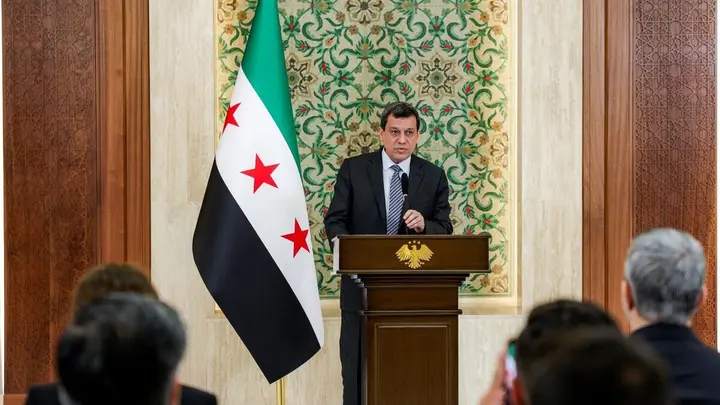
“We announce today the end of the mission of the Syrian Democratic Forces and announce with full responsibility its dissolution as an independent military force,” commander Mazloum Abdi said in a televised address on Tuesday.
The announcement follows an agreement reached earlier this year between Abdi and President Ahmed al-Sharaa providing for the phased integration of SDF forces into the Syrian state.
The SDF became Washington’s principal local partner in the campaign against Islamic State and controlled large parts of northern and eastern Syria. Its forces also assumed responsibility for prisons and camps holding suspected Islamic State fighters and their relatives.
The agreement followed a January offensive by government forces that captured significant areas previously held by the SDF.
Integration was already under way before Tuesday’s announcement. The People’s Protection Units, or YPG, which formed the core of the SDF, had been incorporated into state forces, while YPG commander Sipan Hamo was appointed deputy defence minister responsible for Syria’s eastern territories in March.
The dissolution advances Damascus’s effort to bring armed forces that operated outside central control under a national chain of command. It also marks the culmination of a process that appeared far from certain after Assad’s fall, when the SDF initially sought to retain its forces as a distinct military bloc within Syria’s new security structure.
Washington has backed the integration process, describing the agreement earlier this year as a “historic milestone”. The US had relied on the SDF as its principal Syrian partner against Islamic State, while supporting a transition that would bring Kurdish forces within state institutions.
The dissolution does not by itself determine the future of the Kurdish-led institutions that have administered parts of north-eastern Syria. Those authorities developed alongside the SDF’s military control and exercised responsibility for local government, security and resources.
How those institutions are accommodated within the Syrian state remains unresolved. The SDF will no longer exist as an independent military force; the political settlement governing the north-east is still taking shape.
Ways to read this article:
Sign up to keep reading
Sign up to our newsletter to get full access to all our articles.