Ahmad Badreddin Hassoun’s conviction extends Syria’s emerging accountability process beyond military and security officials.
A Syrian court has sentenced former grand mufti Ahmad Badreddin Hassoun to life imprisonment, one of the most prominent convictions yet of a civilian figure associated with Bashar al-Assad’s government.
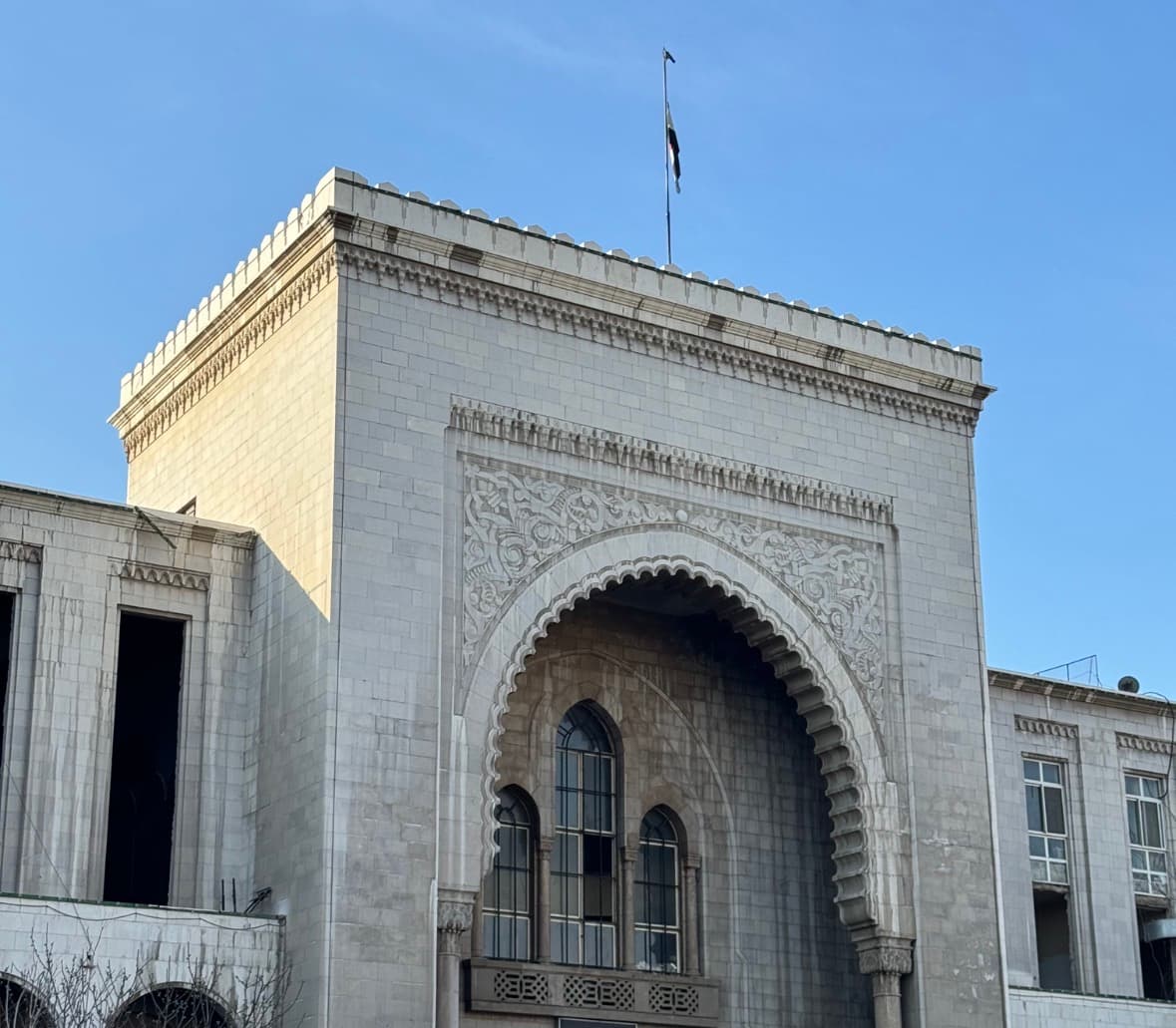
The Fourth Criminal Court in Damascus convicted Hassoun on Monday of acts intended to incite civil war and sectarian fighting, classifying the conduct established against him as crimes against humanity and war crimes. The court also ordered the confiscation of his assets and barred him from benefiting from an amnesty or conditional release.
Hassoun served as Syria’s grand mufti from 2005 until the office was abolished in 2021 and was among Assad’s most visible religious supporters during the conflict. He regularly appeared alongside the former president and defended the government after the uprising began in 2011.
Witnesses testified about Hassoun’s links to the former government’s security and military agencies, with some alleging that he received money in exchange for securing the release of detainees. The court also considered his public role during the conflict and the use of his religious authority in support of the former government and its military operations.
His case differs from prosecutions centred on officials who exercised direct military or security authority. It raises a distinct legal question: when the conduct of a civilian or religious figure can amount to individual criminal responsibility for crimes carried out by others.
The International Criminal Tribunal for the former Yugoslavia confronted similar questions in cases involving figures accused of ordering, instigating or aiding and abetting crimes they did not physically commit. Hassoun was tried under Syrian law in a domestic court, rather than an international tribunal, but the comparison highlights a common principle: criminal responsibility depends on establishing a link between an individual’s conduct and the crimes charged.
Hassoun’s conviction comes less than two weeks after Bashar al-Assad was sentenced to death in absentia, the first Syrian conviction of the former president since his overthrow. Assad, who remains in Russia, was convicted of offences including murder, torture, arbitrary arrest and crimes against humanity. His brother Maher was also sentenced to death in absentia, while Atef Najib, the former Political Security chief in Daraa, received a death sentence after being tried in person.
Criminal prosecutions are only one part of addressing the legacy of mass violence. Syria also faces the unresolved fate of the disappeared, demands for reparations and the reform of institutions associated with past abuses.
Hassoun’s case matters not only for the accountability it represents, but for the reasoning behind it. As further Assad-era cases reach the courts, those judgments will begin to define how individual responsibility for crimes committed during the conflict is established.
Ways to read this article:
Sign up to keep reading
Sign up to our newsletter to get full access to all our articles.